Source Radial Thrust Ball Bearing for Machine Tools and Lifts
Find and compare 30 radial thrust ball bearing options from verified Chinese manufacturers. Buyers can evaluate precision grades, load capacities, and packaging types for machine tools, jacks, and lifting equipment applications.
Key considerations
Products List


Comprehensive Sourcing Guide
Strategic Sourcing Guide for Radial Thrust Ball Bearings
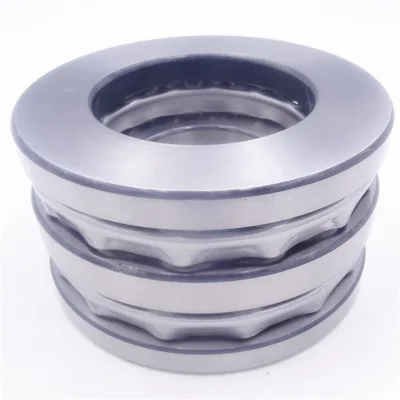
Procuring radial thrust ball bearings requires a nuanced understanding of their unique load-bearing characteristics and the specific industrial applications they serve. While the term "radial thrust" often implies a hybrid capability, the supplied data indicates a primary focus on thrust ball bearings designed for pure axial loads, with specific models like the RAX715 and the 51100-51400 series being prominent in the current market. Buyers must navigate a landscape where customization is available, yet standard specifications for dimensions and materials remain critical for compatibility. This guide outlines the essential factors for sourcing these components effectively, ensuring that procurement decisions are grounded in verified product attributes and industry standards rather than unverified claims.
Technical Specifications and Model Identification
The foundation of a successful procurement strategy lies in precise model identification and technical verification. The observed product data highlights a distinct separation between standard series and custom configurations. The 51100, 51200, 51300, and 51400 series are explicitly listed as standard sizes, with specific model numbers such as 51103, 51112, 51409, 51410, and 51415 appearing in the inventory. These models generally adhere to the ISO and GB/T301 standards, which define the dimensional and performance parameters for thrust ball bearings.
Buyers must distinguish between the "Standard" size classification and the specific numerical designations. For instance, the 51100 series typically covers smaller dimensions, while the 51400 series extends to larger outer dimensions, specifically noted in the data as falling within the "Small and Medium-Sized (60-115mm)" range for certain configurations. The precision grade is another critical technical variable, with observed options ranging from P0 to P6 and P5. The P0 grade represents the standard precision level, while P5 and P6 offer tighter tolerances for applications requiring higher rotational accuracy.
Material composition is equally vital. The primary material observed is Gcr15 Bearing Steel, a high-carbon chromium steel widely used for its durability and fatigue resistance. However, the data also notes "Custom" material options and "Bearing Steel" as a general category. When sourcing, buyers should verify if the specific batch uses Gcr15 or an alternative alloy, as this directly impacts the bearing's load capacity and lifespan. The cage type is consistently identified as a "Stamped Steel Cage," which provides a balance of strength and cost-effectiveness. Furthermore, the seal type is predominantly "Open," meaning these bearings are designed for applications where external contamination is minimal or where the user intends to apply their own lubrication and sealing solutions.
Compliance, Standards, and Certification Verification
Navigating the compliance landscape for industrial bearings requires strict adherence to international and national standards. The supplied facts confirm that products generally align with ISO and GB/T301 standards. The GB/T301 standard is the Chinese national standard for thrust ball bearings, ensuring that the dimensional and performance characteristics meet specific regulatory requirements for the Chinese market. However, for international procurement, buyers must verify if the supplier can provide documentation confirming ISO compliance, as this is the globally recognized benchmark for bearing quality.
Certification status is not explicitly detailed in the product attributes, which means buyers cannot assume any specific third-party certifications (such as ISO 9001) without direct supplier confirmation. The data mentions a "prod_standard" of "10" and "100-135-25" in isolated instances, which likely refer to specific internal or batch-specific standard codes rather than universal industry certifications. Therefore, the procurement process must include a rigorous request for quality certificates. Buyers should ask for mill certificates for the Gcr15 steel to verify the chemical composition and heat treatment processes. Additionally, since the bearings are described as "Interchangeable" and capable of replacing other brands, the supplier should provide a cross-reference table to validate that the claimed interchangeability holds true for the specific model numbers being ordered.
Cost Drivers and Pricing Dynamics
The pricing structure for thrust ball bearings is influenced by several key variables, including precision grade, material quality, and packaging requirements. The observed price range in the market spans from $0.1 to $1000 USD, a vast spectrum that reflects the diversity of the product line. The lower end of this range likely corresponds to standard, open-type bearings with P0 precision and minimal packaging, such as paper boxes. Conversely, the higher end of the price spectrum is driven by custom-made configurations, higher precision grades (P5 or P6), and specialized packaging like wooden cases or palletized industrial shipments.
Customization is a significant cost driver. The data explicitly states that "Customization" is available and that "Custom Made" options are "Yes." This implies that buyers requesting non-standard dimensions, specific materials, or unique cage designs will incur higher unit costs and potentially longer lead times. The Minimum Order Quantity (MOQ) also plays a role in cost efficiency, with observed ranges from 1 to 2000 units. Ordering at the lower end of the MOQ spectrum (e.g., 1-10 units) may result in a higher per-unit cost due to setup fees, whereas bulk orders approaching the 2000-unit threshold can leverage economies of scale.
Packaging costs are another hidden variable. While standard packaging includes paper boxes and wooden boxes, industrial packaging and wooden cases are listed as separate options. For heavy-duty applications or international shipping, the choice of a wooden case or palletized delivery adds to the total landed cost but is essential for protecting the bearings from damage during transit. Buyers should factor these packaging requirements into their total cost of ownership calculations, especially when sourcing from the Zhejiang region in China, where logistics costs can vary based on the weight and volume of the wooden crates.
Typical Applications and Load Direction Analysis
Understanding the application environment is crucial for selecting the correct bearing type. The data clearly defines these components as "Thrust Ball Bearings" designed for "Pure Axial Load." This is a critical distinction; unlike radial bearings that handle loads perpendicular to the shaft, these bearings are engineered to support forces parallel to the axis of rotation. The "Load Direction" is explicitly listed as "Axial Bearing" and "Thrust Bearing," confirming their primary function.
The specified applications include machine tools, jacks, lifting equipment, and agricultural machinery. In machine tools, these bearings are often used in spindle assemblies where axial positioning is critical. In jacks and lifting equipment, the ability to handle pure axial loads is essential for safety and stability. The "Single/Double Direction" attribute indicates that the bearings can be configured to support thrust in one direction or both, depending on the mechanical design of the application. For double-direction applications, the bearing assembly must be capable of handling axial loads from both sides, which is common in vertical shaft applications.
It is important to note that while the data mentions "Rolling Body: Roller Bearings" in one instance, the overwhelming majority of the attributes point to ball bearings (Thrust Ball Bearing). Buyers must be cautious of this discrepancy and verify the rolling element type for the specific model they are ordering. Additionally, the "Contact Angle" is listed as 15 degrees, which is a standard angle for thrust ball bearings, influencing the load capacity and the ability to handle combined loads if any radial component exists. The "Separated" attribute indicates that some models are designed to be disassembled for maintenance or installation, while others are "Unseparated," which simplifies the installation process but may limit maintenance options.
Supplier Evaluation and Origin Considerations
When evaluating suppliers, the origin of the product is a primary factor. The data consistently identifies the product origin as "China," with a specific mention of "Zhejiang" as a production hub. Zhejiang is a well-known manufacturing center for bearings and mechanical components in China, offering a robust supply chain and competitive pricing. However, the concentration of production in this region means that buyers should conduct thorough due diligence to ensure the supplier has the capacity to meet quality standards and delivery schedules.
Supplier evaluation should focus on their ability to provide "Custom Made" solutions and their track record with "Interchangeable" products. Since the data suggests that these bearings can replace other brands, the supplier must demonstrate a deep understanding of global bearing standards to ensure compatibility. The "prod_packing" attributes vary from "Carton, Pallet" to "Wooden Case," indicating that suppliers may offer different levels of service. A reputable supplier should be able to provide flexible packaging options to suit the buyer's logistics needs.
Furthermore, the "Accuracy Level" is listed as "Standard," which suggests that the baseline quality is consistent with industry norms. However, for high-precision applications, buyers should verify if the supplier can meet the P5 or P6 precision grades mentioned in the data. The "Standard" accuracy level may not be sufficient for high-speed or high-precision machinery, so clarifying the precision requirements during the supplier selection process is essential.
Quality Control and Long-Term Procurement Strategy
Implementing a robust quality control (QC) strategy is vital for ensuring the longevity and reliability of the bearings. Given that the materials include Gcr15 Bearing Steel and the precision grades range from P0 to P5, buyers should establish clear QC protocols. This includes verifying the material composition through mill certificates and checking the dimensional accuracy against the ISO and GB/T301 standards. The "Open" seal type means that the bearings are susceptible to contamination, so QC should also include checks for surface finish and cleanliness to prevent premature failure.
For long-term procurement, buyers should consider the "Customization" availability as a strategic advantage. If a buyer has unique application requirements, working with a supplier that offers custom manufacturing can lead to optimized performance and reduced downtime. However, this requires a strong partnership and clear communication of specifications. The "Interchangeable" nature of the bearings also offers flexibility; if a specific brand becomes unavailable, the buyer can switch to a compatible model from a different supplier without redesigning the entire assembly.
Finally, buyers should monitor the "Model Series" and "Standard Size" availability to ensure supply continuity. The 51100-51120 and 51122-51130 series are identified as specific model ranges, and maintaining a relationship with a supplier who can consistently provide these series is key to avoiding production disruptions. By focusing on these technical, compliance, and strategic factors, buyers can effectively navigate the market for radial thrust ball bearings and secure high-quality components for their industrial applications.
FAQs
What precision grades are available for radial thrust ball bearings?
Precision grades P0, P6, and P5 are available for these bearings. The P0 grade represents standard precision, while P5 and P6 offer tighter tolerances for applications requiring higher rotational accuracy and performance stability.
Which material is primarily used for radial thrust ball bearings?
Gcr15 Bearing Steel is the primary material used for these components. This high-carbon chromium steel provides the necessary durability and fatigue resistance, though custom material options may be available upon request.
Can these bearings be customized for specific industrial needs?
Yes, customization is available for custom-made configurations. Buyers can request non-standard dimensions or unique designs, though this may affect unit costs and lead times compared to standard inventory items.
What load direction do radial thrust ball bearings support?
These bearings are designed to support pure axial loads. They are suitable for applications like machine tools and lifting equipment where forces act parallel to the axis of rotation rather than perpendicular to it.
Which standards do these bearings comply with?
Products generally align with ISO and GB/T301 standards. These standards define the dimensional and performance parameters, ensuring compatibility with international and Chinese market requirements for thrust ball bearings.
What packaging options are available for industrial shipments?
Packaging options include paper boxes, wooden cases, and industrial packaging. The choice depends on the order size and shipping requirements, with wooden cases often used for heavy-duty or international transport protection.